
Materials
Guide
Shaping the standard in thermoplastic extrusions — how the right material actually gets chosen, and the resins we run.
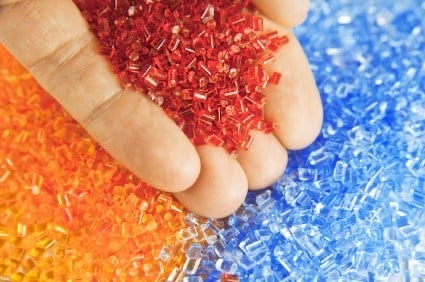
Material selection as engineering, not guesswork.
We're Custom Profiles, Inc. — a U.S. manufacturer of custom thermoplastic profile extrusions. We make the rigid and flexible plastic profiles that go into windows, doors, and a lot of other products where fit, finish, and longevity matter. If you're looking for a partner who treats material selection as engineering and not guesswork, you're in the right place. We'll do whatever it takes to make your idea take shape — and hold that shape for the life of the part.
This guide does two things. First, it walks through how a material actually gets selected for an extruded profile — the real-world version, the way we do it with customers on the phone, not a textbook. Second, it gives you a working reference on the resin families we run and what each one is good (and bad) at. If you only read one section, read the next one.
How to Select a Material for a Plastic Extrusion
Most material problems we get called in to fix didn't start at the extruder. They started months earlier, when someone picked a resin off a spec sheet because it had the right tensile strength, or because it's what the last part used, or because it was cheap. Then the part chalks in the sun, or it grows a quarter inch on a hot day and pops out of its channel, or it cracks the first cold morning on a loading dock. The resin "met spec." It just didn't fit the job.
Here's how we think about it instead.
Start with the part's job, not the resin
Before we talk about any plastic by name, we want to understand the part's life:
- ›Where does it live? Inside, outside, or both? A part behind drywall has almost no constraints. A part bolted to the south face of a building in Phoenix has a lot of them.
- ›What does it have to do mechanically? Hold a pane of glass rigid? Snap onto a mating part and stay snapped? Flex thousands of times as a seal? Take a hit from a vacuum cleaner or a forklift?
- ›What’s the temperature range — not the average, the extremes? A dark profile in direct sun can hit 160–180°F even when the air is 95°F; the cold end matters too if it’s installed, shipped, or slammed at 0°F.
- ›What’s it exposed to? UV, rain, cleaning chemicals, road salt, solvents, skin oils, food?
- ›What does it have to look like, and for how long? Must color and gloss survive 10 years outdoors, is it painted over, or is it hidden?
- ›What does it mate with, and how is it joined? Glued, welded, screwed, snapped, co-extruded to a softer seal? The joining method quietly eliminates a lot of materials.
- ›What does it cost today, and what’s the volume? Cost per foot — not cost per pound — and how many feet a year.
- ›Are there codes or standards in play? Fenestration (AAMA/FGIA), flammability (UL 94), food contact (FDA), potable water, lead-free, recycled-content requirements.
Nine times out of ten, by the time we've answered those, the field of candidate materials has gone from "any plastic" down to two or three. The rest of selection is choosing among those few and getting the grade right.
Why extrusion is its own discipline (and why a spec sheet alone will fool you)
This is the part people new to extrusion miss, and it's where we earn our keep. A resin's data sheet tells you how the solid plastic behaves. Extrusion is about how the melt behaves on its way to becoming that solid. Two grades of "the same" plastic — same family, same data-sheet numbers — can behave completely differently coming out of a die. Picking a material for extrusion means picking it on three axes at once: end-use properties, processability, and cost.
- ›An injection-molding grade is usually the wrong grade for extrusion. Molding wants a thin, runny melt that fills a cavity fast. Extrusion wants the opposite — a stiff, high-viscosity melt with enough melt strength to hold its shape after it leaves the die. Ask for "ABS" and you can get either; the grade is the whole ballgame.
- ›The part that comes out is not the shape of the die. Three things move the dimensions between the die lip and the cutoff saw: die swell (the melt relaxes and expands as it exits, sometimes 10–50% of the gap), draw-down (the puller stretches the profile thinner), and thermal shrinkage (it shrinks as it cools). We design the tool to compensate for all three at once — which is why a die built for one material won't run another. Switch resin families and you're usually buying tooling.
Shrinkage is the tolerance budget. Amorphous resins (PVC, ABS, PC, ASA) shrink a little and predictably. Semi-crystalline resins (PP, PE, nylon) shrink more and less evenly. Rough numbers — confirm against production data for the specific grade:
| Family | Typical linear shrinkage | What it means for you |
|---|---|---|
| Rigid PVC | ~0.2–0.4% | Tightest tolerances achievable; least movement after the die |
| Polycarbonate | ~0.5–0.7% | Close to PVC if it’s dried properly |
| ABS / ASA | ~0.4–0.7% | Good; predictable |
| Polypropylene | ~1.0–2.5% | Mid-to-high; asymmetric sections amplify the differential |
| HDPE | ~1.5–3.5% | Highest; hardest to hold tight in complex sections |
Tell us the two or three dimensions that actually drive fit and function, and let the rest float. We'll hold the critical ones and pick the lowest-shrink grade that still meets the application.
- ›Some resins have to be dried before they'll run clean. PC, ABS, ASA, PETG, and especially nylon are hygroscopic (nylon and PC are the thirsty ones; ABS and ASA only mildly) — run them wet and you get surface streaks, bubbles, splay, and dimensional drift, and with nylon, PC, and PETG moisture at melt temperature actually chops the polymer chains (hydrolysis) and costs you strength. A real cost and handling consideration, not a footnote.
- ›Regrind and recycled content shift the part. Virgin resin and the same resin at 30% regrind are, dimensionally, not the same material. Nothing wrong with regrind — we use it deliberately to save money and carbon — but it has to be planned, not stumbled into.
The properties that actually decide it
Does the profile need to stay rigid under load, or flex? A glazing bead or structural frame wants high modulus (rigid PVC, PC/PBT, Noryl, GPPS). A clip or living hinge wants low. Usually the first cut.
Room-temperature impact numbers lie — parts break in the cold. Rigid PVC is tough at 70°F and brittle below freezing. PC, PC/ABS, Xenoy, impact-modified ABS, ASA, and impact-copolymer PP hold up cold. Always spec impact at the coldest temperature the part will ever see a load.
Will it soften or sag at its hot extreme? Rigid PVC and PP top out around 140–170°F service. When heat drives the spec, move up to ABS/ASA, then PC blends, Noryl, or Xenoy.
Every plastic expands far more than the metal or glass it attaches to — polyolefins (PP, PE) move the most, with PVC, PC, and Noryl on the lower (better) end. A 10-foot dark profile can move roughly a quarter inch (rigid PVC) to over an inch (a polyolefin like HDPE) between a cold night and a hot afternoon. Pinned at both ends or mated to aluminum, that movement bows, gaps, tears a seal, or pops a corner weld. Long exterior parts often get selected on CLTE as much as anything.
Decides almost every exterior cosmetic part. Unprotected outdoors: ABS yellows, polystyrene crazes, PP/PE chalk, clear PC yellows. The resins that take the sun are ASA, properly stabilized rigid PVC, and UV-stabilized PC and PC/PBT. The big lever is capstock.
Painted (adhesion matters), laminated with a woodgrain film, welded at the corners (PVC welds beautifully; polyolefins don’t), or color-matched and gloss-stable for a decade?
Solvent exposure, food contact, flammability rating, potable water round it out.
The lever that saves the most money: co-extrusion & capstock
You don't have to make the whole profile out of the expensive material.
When a customer says the "right" material is too expensive, this is the first place we look. Often the answer isn't a cheaper resin — it's using the expensive one only where it earns its keep.
What tolerances are realistic
Extruded profiles are formed hot, pulled, cooled, sized, and cut — the part keeps moving the whole way. A realistic baseline is on the order of ±0.010″ on small/critical dimensions and looser on large overall dimensions and long lengths, depending on the resin's shrinkage, the wall-thickness balance, and how symmetric the profile is. The practical path to tight tolerances: pick the lowest-shrink material the application allows, design a balanced section, identify the few dimensions that truly matter, and we'll build the tool and tune the process to hold those. We'll tell you up front what's achievable before you commit a design to it.
Sustainability & recycled content
- ›Recycled PVC by co-extrusion — recycled core, virgin cap. It’s mainstream in Europe (VinylPlus/EPPA take-back targets), where roughly 2 kg of CO₂ is avoided per kg of recycled PVC versus virgin. In North America it’s less standardized — post-industrial scrap is routinely reused in hidden chambers, but post-consumer recycled-core profiles are still a differentiator. We build to a recycled-content target; just give us the number.
- ›Lead-free is the norm, but the backstory differs by region: Europe phased out lead stabilizers (~2015, VinylPlus); North America’s historical workhorse was tin (organotin), now moving tin → mixed-metal calcium-zinc. Carrying an old lead-stabilized spec? Worth a conversation.
- ›Recycled PE/PP is mainstream in North America — capped composite decking, trim, and fencing routinely run 80–95% recycled content in the core under a durable virgin cap. Recycled ABS shows up mostly in engineered/industrial profiles.
- ›Bio-attributed (mass-balance) PVC and polyolefins are real (ISCC PLUS–certified, e.g. INEOS BIOVYN) but are a certified accounting of renewable feedstock, not a physically bio-based polymer — still premium and project-driven.
- ›Regulatory pressure is rising on phthalate plasticizers (moving to DOTP/DINCH), PFAS disclosure (Maine and Minnesota leading), and heavy metals (a sum of lead/cadmium/mercury ≤100 ppm is a sound target — matches CONEG and EU 94/62/EC). Shipping into multiple markets? Build to the strictest one now.
Standards that govern window & door profiles
If your part goes into fenestration, these are the documents that matter. Note that AAMA is now FGIA — the old "AAMA" numbers are still how everyone refers to the standards.
Underneath those, the material tests we run and report against include ASTM D790 (flexural), D256 (Izod impact), D648 (HDT), D696 / E831 (CLTE), D1525 (Vicat), and G154 / G155 / D4329 (accelerated weathering). When you need documentation for a code or a customer, we provide it.
Putting it together — the short version
- Define the part's job and environment first; let that cut the field to a few candidates.
- Among those, decide on stiffness, cold impact, HDT, CLTE, and weatherability — in that rough priority.
- Make sure the candidate is processable as an extrusion and pick the right grade, not just the family.
- Use co-extrusion / capstock to put expensive performance only where it's needed.
- Hold the few dimensions that matter, pick the lowest-shrink resin that still meets the app, design a balanced section.
- Confirm against the relevant standards and get the documentation.
The Materials We Run
We partner with leading resin producers and recyclers, so we can match the material to the job instead of forcing the job onto whatever we happen to stock. Here's the working knowledge on each family — what it's genuinely good for, and what to watch.
General-Purpose / Commodity Resins
The workhorse of window and door extrusion: stiff, dimensionally stable (lowest shrinkage and CLTE of the common resins), inherently flame-retardant, weldable at the corners, and excellent weatherability when properly stabilized and pigmented. Takes capstock and laminate beautifully. Tightest tolerances of anything we run.
Plasticized PVC for seals, gaskets, bumpers, trim, and the soft leg of a dual-durometer part. Wide durometer range, good chemical resistance, bonds and co-extrudes with rigid PVC.
Tough, rigid, dimensionally stable, easy to extrude, paints and glues well, higher heat resistance than PVC. Great for interior structural and cosmetic profiles.
Light, cheap, excellent chemical and moisture resistance, good living-hinge/flex behavior (impact copolymer holds up cold). Good for seals, liners, and chemical-exposure parts.
Tough, flexible (grade-dependent), outstanding chemical resistance and low-temperature impact, very low cost. HDPE for stiffer work, LDPE/LLDPE for flexible parts and tubing.
Inexpensive, rigid, dimensionally stable, easy to run, takes a nice finish. GPPS is stiff and clear-ish; HIPS adds impact toughness. Good for interior trim and cosmetic parts.
Engineered & Specialty Resins
ABS’s UV-stable cousin and the go-to capstock for exterior parts. Excellent color and gloss retention in sun, good toughness and heat resistance. Use as a thin weatherable skin over a PVC, ABS, or recycled core, or solid for smaller exterior parts.
Very high impact (often "no break" at room temp), high heat resistance, excellent clarity, good cold toughness. For glazing, light-management, and high-impact structural profiles.
PC toughness and heat resistance with PBT’s chemical resistance and flow. Excellent cold impact (often no-break sub-zero), high HDT, low CLTE, good weatherability in UV-stabilized grades. For demanding structural exterior parts.
Stiff, high HDT, low CLTE (dimensionally stable across temperature), good electrical properties, low moisture absorption. For heat- and dimension-critical structural profiles.
High strength and stiffness, excellent wear and abrasion resistance, good chemical resistance and toughness. For wear strips, structural inserts, and mechanical parts.
High-temperature engineering resin — holds properties where most thermoplastics have long since softened. For the rare profile with serious continuous-heat or demanding thermal/chemical requirements.
Specialty polyolefin with excellent creep resistance and flexibility under sustained load and temperature — seals, tubing, and parts that have to resist long-term deformation. Niche and application-specific.
The modern soft material for seals, gaskets, bumpers, and the flexible leg of a dual-durometer profile. Rubber-like flexibility and compression set with the recyclability and clean processing of a thermoplastic. Co-extrudes with rigid substrates, wide durometer range, good weathering in the right grade. Often a better choice than flexible PVC where a non-PVC or higher-performance seal is wanted.
Quick comparison
Screening values for extrusion-relevant grades, against rigid PVC as baseline (cost = 1.0). Use to narrow the field, not as design allowables.
| Resin | Stiffness | HDT | CLTE | Cold impact | Weather | Cost |
|---|---|---|---|---|---|---|
| Rigid PVC | High | Low | Low (good) | Poor | Good | 1.0 |
| Flexible PVC | Very low | Low | High | Good | Good | ~1.0 |
| ABS | Med-high | Med | Med-high | Good | Poor | 1.2–1.4 |
| ASA | Med | Med | Med-high | Good | Excellent | 1.4–1.7 |
| PP | Low | Low-med | High | Good | Poor | 0.8–1.0 |
| HDPE | Low | Low | Highest | Excellent | Fair | 0.8–1.0 |
| HIPS / PS | Med-high | Med | Med-high | Fair/poor | Poor | 0.7–0.9 |
| Polycarbonate | Med-high | High | Med (good) | Excellent | Fair (cap) | 2–3 |
| PC/ABS | Med-high | High | Med | Excellent | Poor-fair | 1.6–2.2 |
| Xenoy (PC/PBT) | Med-high | High | Low-med | Excellent | Good (UV) | 2–3 |
| Noryl (PPO) | High | High | Low (good) | Moderate | Fair-good | 2–3 |
| Nylon (PA) | High (dry) | Med | Med | Good | Poor-fair | 1.5–2.0 |
"If you need X, start here"
Extrusion & Value-Added Services
We don't stop at running the profile. Where it saves you steps, cost, or risk, we do it in-house.
The whole of Part 1 — done with you, on your actual part, to enhance specs, cut cost, or hit a sustainability target.
We give your drawing a second look and adjust the section for balanced walls, holdable tolerances, and a die that runs clean — before you’ve committed.
Profile dies designed, built, and compensated for your material, so the cooled part lands on the print.
Rigid carrier and soft seal combined in one extruded part — eliminating a downstream assembly step.
Weatherable or premium skin over an economical or recycled core. The single biggest cost lever we have.
Raised texture and surface pattern to put your brand’s mark on the part.
Angled cuts for corner/miter joints (jamb-to-head on a window or door), done in-house for proper fit.
Packed to your spec so parts protect themselves and drop straight into your line.
We flex our QC to produce the documentation you need — dimensional verification, testing against your mating parts, and reporting against the ASTM/AAMA methods in Part 1.
Why customers move their work to us
- ✓We use in-house resources to cut turnaround and protect your budget — instead of pushing every complex job onto specialized tooling you wait and pay for.
- ✓We optimize the print for extrusion before we cut steel, so you get in-spec parts instead of a faithful reproduction of a drawing that was never going to run.
- ✓You talk directly to an engineer — open communication between your technical team and ours is the point, not the exception.
Ready to
get started?
Send us the part — a drawing, a sample, even a sketch and a description of where it lives and what it has to do. We'll tell you what it should be made of, what it'll cost, and what we can hold.